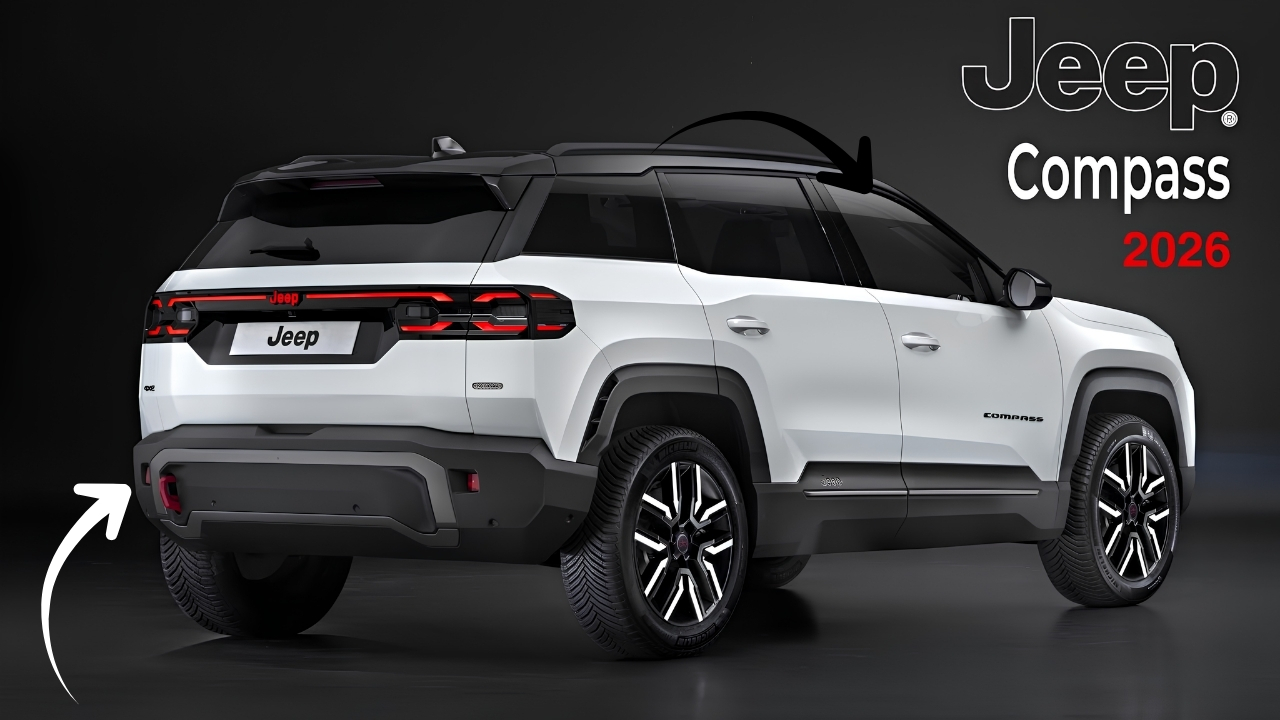
2026 Jeep Compass : The 2026 Jeep Compass is shaping up to be one of the most important new vehicles for Jeep Australia.
After the existing Compass range was paused locally as available stock ran out, Jeep has confirmed that an all-new, third-generation Compass is expected to arrive in Australia during the second half of 2026.
That return matters because the Compass has traditionally placed Jeep in one of Australia’s most competitive SUV categories—where buyers expect everyday comfort, family-friendly space, modern technology and, increasingly, electrified power.
The next Compass will not simply be a light facelift of the outgoing model. It is a complete redesign built around Jeep’s broader move towards electrification.
The new vehicle has already been revealed and driven overseas, giving Australian buyers a useful early look at what may be headed here.
While the final Australian line-up, specifications and timing are still to be formally detailed, the evidence so far points to a more modern, roomier and more technically ambitious Compass than before.
Bigger Body, Stronger Presence
The new Compass has been designed with a noticeably more substantial shape. At approximately 4.55 metres long, it is around 144mm longer than the previous generation, while its wheelbase has reportedly grown by 159mm.
Those changes should make a meaningful difference inside the cabin, particularly for rear-seat passengers who want more legroom on longer trips.
Its styling remains unmistakably Jeep. The familiar seven-slot grille is still present, but the front end is sharper and more contemporary, with slim lighting, squared-off wheel arches and a more planted stance.
Rather than moving away from the rugged personality that defines the brand, Jeep appears to be adapting it for an era when SUVs need to look at home in city traffic, school drop-off zones and weekend escapes alike.
For Australian drivers, the larger proportions could be particularly relevant. The outgoing Compass competed in a crowded small-SUV market, but the new model’s size may place it closer to the border between small and medium SUVs.
That could broaden its appeal to households looking for a vehicle that is compact enough for urban parking but practical enough for holidays, sports gear and regular family use.
Overseas reports quote cargo capacity of up to 550 litres, which would be a significant selling point if that figure applies to Australian versions.
Electrification Takes Centre Stage
The headline news is the new Compass’s powertrain strategy. Jeep is preparing the model with electrified options rather than relying entirely on conventional petrol engines.
Internationally, the range begins with a 48-volt mild-hybrid petrol system, while plug-in hybrid and fully electric versions are also planned or available depending on market.
A battery-electric Compass has been a major focus of early overseas coverage. One initial version uses a single electric motor with roughly 159kW of power and a 74kWh battery.
Jeep claims a driving range of about 500km under the WLTP test cycle, while a fast charger capable of delivering up to 160kW could take the battery from 20 to 80 per cent in around 30 minutes under suitable conditions.
That combination would give the Compass an entirely different character from the older petrol and plug-in hybrid versions. Electric torque is delivered immediately, so acceleration in normal traffic should feel smooth and responsive.
It could suit commuters who have convenient access to home charging, while also providing enough claimed range for many regional trips between charging stops. Real-world distance will naturally vary with speed, weather, terrain, tyre choice and use of air conditioning.
A Proper 4WD Electric Option
Jeep is also keeping its off-road identity in view. Overseas, the Compass 4xe electric model has been announced with a dual-motor, all-wheel-drive layout, using a larger 96.1kWh battery. This version is reported to offer 275kW and a WLTP range of 606km, with a claimed 0–100km/h time of 5.4 seconds.
The importance of this model is not simply its performance. It gives Jeep a way to offer genuine all-wheel-drive traction without a traditional internal-combustion engine.
That could be attractive to Australian buyers who want the quietness and smoothness of an EV but do not want to abandon the confidence associated with a Jeep on wet roads, gravel tracks or rougher holiday destinations.
Whether Australia receives this exact 4xe version, and when, remains unconfirmed. However, its existence signals that the new Compass platform has been developed with more capability than a typical city-focused electric SUV.
Jeep will need to clearly explain how the vehicle’s off-road systems, battery protection, ground clearance and driving modes are tailored for local conditions before it can fully win over traditional Australian Jeep customers.
What Australia May Receive
The exact Australian range is still one of the biggest unanswered questions. Jeep has previously indicated the next-generation Compass would arrive locally in the second half of 2026, while local reports have suggested an electrified mix could include mild-hybrid, plug-in hybrid and electric powertrains.
The final decision may depend on supply, charging infrastructure, customer demand and the brand’s wider Australian product strategy.
A broad choice of powertrains would make sense. A mild hybrid could appeal to buyers who are not ready to charge a vehicle, while a plug-in hybrid may suit drivers who can complete shorter weekday journeys on electricity but want petrol backup for long-distance travel.
The full electric Compass would be the clearest expression of Jeep’s future-facing plans, particularly for households ready to make the transition to battery power.
The challenge will be positioning. Australia’s SUV market is filled with established competitors, including hybrid-focused models and an expanding number of electric alternatives.
Jeep will need to deliver competitive equipment, dependable ownership support and strong real-world usability—not just adventurous styling—to make the new Compass stand out.
Why This Launch Matters 2026 Jeep Compass
The 2026 Jeep Compass could represent a reset for Jeep in Australia. The temporary absence of the outgoing model has left the brand without a presence in a large-volume SUV segment, making the next-generation vehicle especially significant.
It also has the potential to become a bridge between Jeep’s heritage and the changing expectations of modern buyers.
For many Australians, the appeal will come down to whether the Compass can blend its traditional strengths—character, rugged design and all-road confidence—with the practical needs of daily life.
A spacious cabin, useful driving range, convenient charging performance and a choice of electrified systems could make it far more relevant than its predecessor.
Also Read this – Nokia Magic Max 5G slimest HD display Smartphone, battery is 6800mAH with 85Watt fast charger
The new Compass is therefore more than another SUV launch. It is an opportunity for Jeep to show that its distinctive personality can work in an electrified future, without losing the sense of adventure that made the brand famous.
With Australian arrival expected in the latter half of 2026, buyers interested in a more capable and individual alternative to mainstream SUVs will have good reason to watch closely.