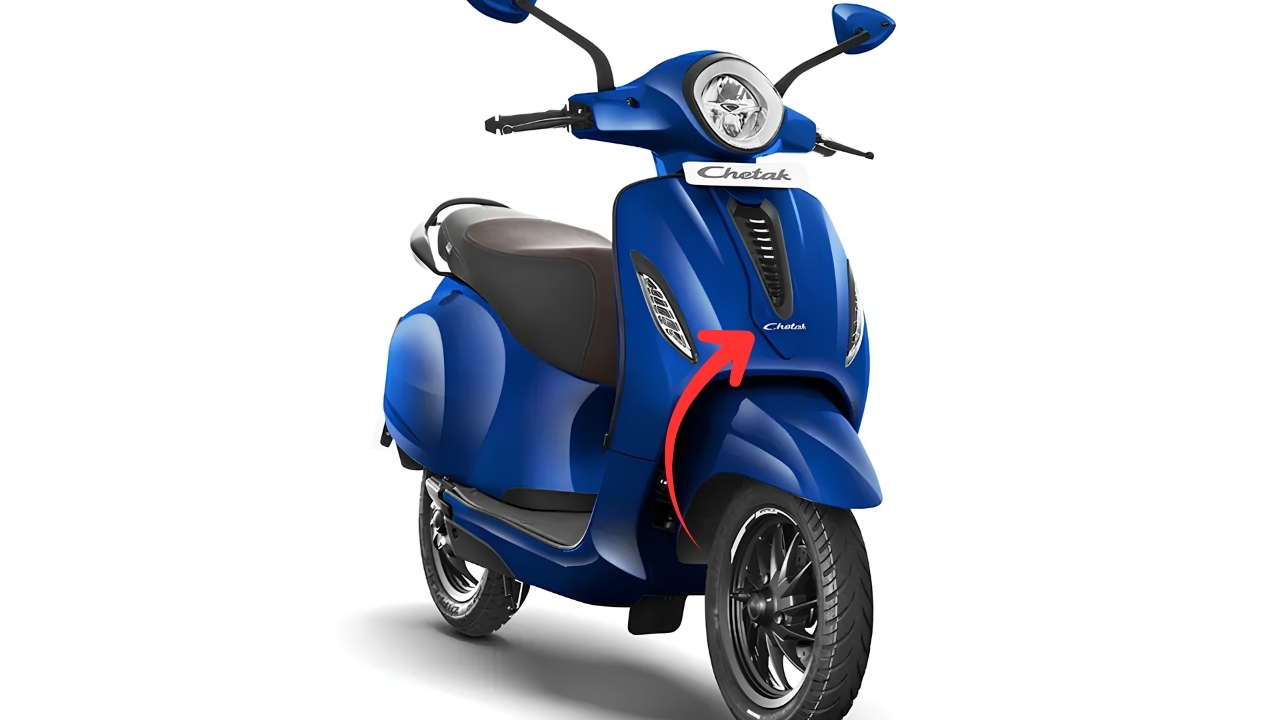
Bajaj Chetak EV : The Bajaj Chetak EV is entering a more confident phase in India’s fast-changing electric two-wheeler market. Once remembered as one of the country’s most familiar petrol scooters, the Chetak name has now built a solid second identity as an electric mobility brand.
In 2026, Bajaj Auto has sharpened that identity with a refreshed product line, improved performance, more connected features, and a larger production plan.
The big news is that Bajaj is no longer treating the Chetak as a single electric scooter with a few variants. The company has reorganised the range into three clearer families: C25, C30 and C35.
This move makes it easier for buyers to understand what each version is meant for, whether they need a compact city commuter, a balanced daily scooter, or a higher-spec model with stronger performance and more technology.
Bajaj announced the wider portfolio upgrade in April 2026, adding features such as ride modes, hill-hold assistance, over-the-air updates, and Google Maps navigation on the flagship version.
New Range, Better Everyday Performance
The updated Chetak lineup reflects how Indian EV buyers have changed. Early electric scooters were mostly judged by their running cost, but buyers now expect usable range, solid build quality, practical storage, dependable software and confident road performance.
Bajaj has responded by raising top speeds across the range and giving the premium models more everyday functionality.
The C35 family remains the most feature-rich part of the lineup. The C3501 and C3502 can now reach 80 km/h, while the C3503 offers a top speed of 70 km/h.
This may not sound dramatic on paper, but it makes a real difference during faster urban commutes, flyover stretches and open suburban roads. The flagship C3501 also receives a stronger motor output of 4.8 kW, helping it feel more responsive while accelerating in traffic.
The C30 series has also become more practical for regular riders. Bajaj has improved the C3001’s charging time, bringing its 0–80 percent charge duration down to 2 hours and 55 minutes from the earlier 3 hours and 50 minutes.
For office-goers, students and city-based families, this shorter charging window can make the scooter easier to fit into a daily routine.
At the entry side of the portfolio, the Chetak C25 brings the brand’s familiar metal-bodied design into a lighter and more accessible package.
It uses a 2.5 kWh battery, offers a claimed range of up to 113 km, reaches 55 km/h, and is designed primarily for calm city use rather than high-speed commuting.
Technology Is Becoming More Important
One of the strongest signs of Bajaj’s changing EV strategy is the arrival of more digital features. The flagship C3501 now includes integrated Google Maps navigation through the Chetak app, giving riders real-time route guidance without depending entirely on a phone mounted to the handlebar. This is especially useful for riders who travel across unfamiliar parts of a city or make frequent work-related trips.
The C30 and C35 series now also get Eco and Sport ride modes along with hill-hold assist as standard equipment. Eco mode is intended to help conserve battery energy during relaxed commuting, while Sport mode offers quicker response when riders need more urgency in traffic.
Hill-hold assist can be useful on ramps, inclines and crowded flyovers, where an electric scooter might otherwise roll backward when the rider pauses.
Bajaj has also added over-the-air update capability on the C3501 and C3502. This means certain software improvements can be delivered remotely instead of requiring a physical trip to a service centre.
In a market where electric scooters increasingly depend on digital systems, this is an important step. It suggests that the Chetak is being developed not only as a vehicle, but as a connected mobility product that can improve over time.
Practical Design Still Remains the Chetak’s Strength
Despite the new technology, the Chetak’s biggest advantage continues to be its solid, familiar character. Many electric scooters use fibre-heavy panels, but the Chetak has retained its metal-bodied construction and retro-modern styling. For buyers who want a scooter that feels substantial and durable, this remains a major attraction.
The Chetak 35 series also offers 35 litres of under-seat storage, which improves its usefulness for everyday household tasks.
A full-face helmet, charging cable, documents or small shopping items can be carried more easily than before. This may seem like a small feature, but storage often decides whether an EV works well for real family use.
Bajaj’s focus appears to be straightforward: give riders an EV that feels premium without becoming intimidating. The Chetak is not trying to look like a futuristic gadget on wheels.
Instead, it combines traditional scooter proportions with modern electric hardware and digital convenience. That approach may appeal strongly to buyers moving from petrol scooters who want a familiar ownership experience.
Sales Momentum and Expansion Plans Bajaj Chetak EV
The Chetak’s market momentum is also becoming difficult to ignore. Bajaj Auto sold 52,248 Chetak scooters in August 2026, contributing to total electric two-wheeler sales of 53,748 units when Yulu EVs are included.
That gave Bajaj an estimated 28 percent share of the electric two-wheeler market for the month, indicating that Chetak has become one of the company’s most important growth engines.
The company is now preparing to raise Chetak production capacity from 50,000 units per month to 60,000 units per month in the near term.
Also Read this – 2026 Range Rover Motorhome premium look like 7 star hotel, engine is powerful
This capacity expansion shows that Bajaj expects demand to remain strong even as competition intensifies from brands such as TVS, Ather, Ola Electric and newer entrants.
The broader EV market is becoming more crowded, but Bajaj has a few natural advantages: a well-known legacy brand, an established dealer network, manufacturing experience and a product that has steadily improved instead of changing direction every few months. For many buyers, that stability matters as much as headline-grabbing specifications.
The new Chetak range signals that Bajaj is serious about strengthening its EV presence. With better speed, faster charging, navigation, ride modes, useful storage and a clear model structure, the electric Chetak is evolving from a nostalgic name into a serious modern scooter choice.